Chain drive
Durable and common, but louder. A good fit for detached garages and shops.

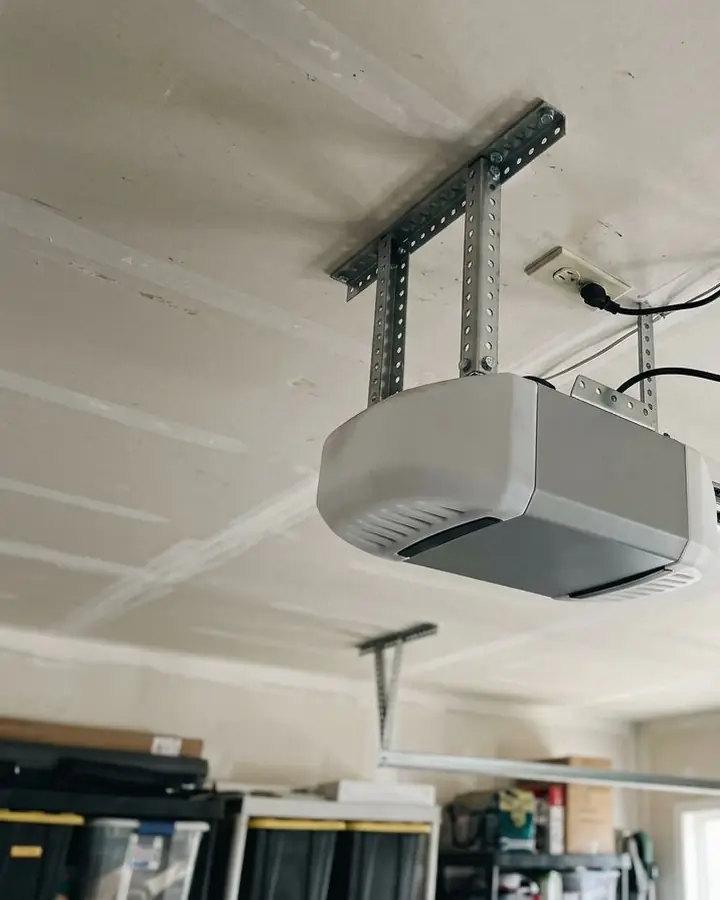
Most opener trouble is the safety sensors, the remote or power. Older openers are a different story: the federal reversing standard covers openers made on or after January 1, 1993, and the CPSC says openers without automatic reversal should be replaced.
Get a quoteThe most common fix
That is usually the photo eyes near the floor, blocked, dirty or out of line. They are there on purpose: 16 CFR 1211 requires a closing residential opener to start reversing within 2 seconds of contact, and photo eyes are one of the allowed secondary safety devices.
Not sure what is wrong? Use the garage door troubleshooter.
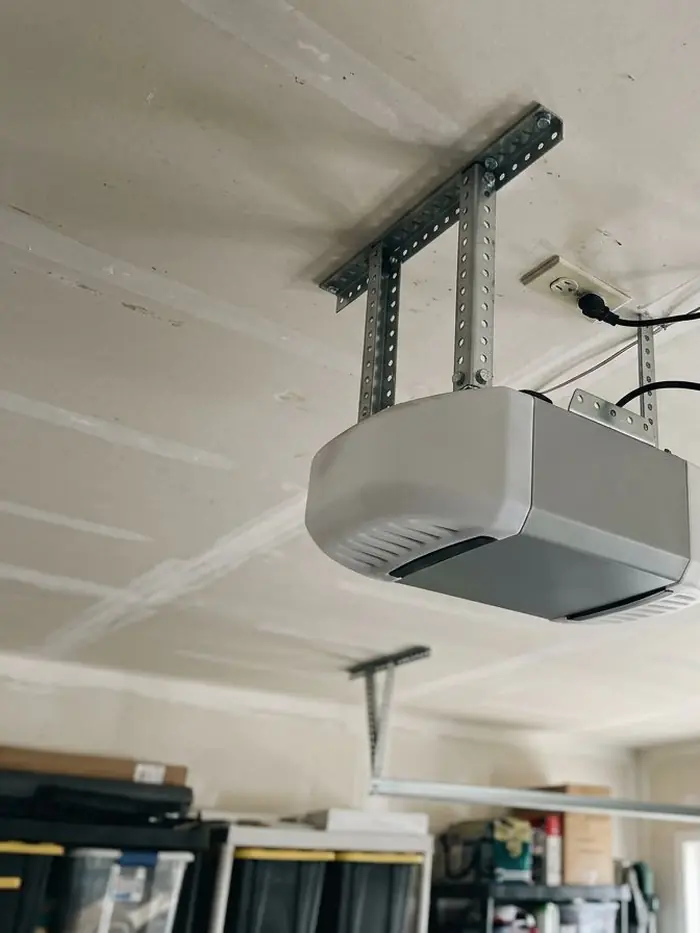
Once a month
DASMA TDS-364 recommends monthly testing of both the reversing mechanism and the photo eyes. DASMA TDS-369 describes the reversal test with a 2 x 4 laid flat under the door.
Lay a 2 x 4 flat in the doorway and close the door. It should reverse after touching the board. If it does not, stop using the opener until it is serviced.
Start closing the door and pass an object through the beam. The door should stop and reverse.
Replacing an opener
The right opener depends on the door, the ceiling and what is above the garage. Our opener fit estimator sorts the options in a minute.
Durable and common, but louder. A good fit for detached garages and shops.
Quieter, which matters with a bedroom over the garage.
Mounts beside the door and frees the ceiling, but needs a torsion spring setup and some side room.
Most ceiling openers need the maker's rail extension kit for an 8 ft door.
Short answers
What people ask before replacing an opener.
A new battery first, then the wall control lock setting. Many wall controls have a lock or vacation mode that blocks remotes. Remotes can be reprogrammed with the learn button on the motor. Chamberlain Group support has manuals by model.
Run the monthly reversal test to find out. If the door does not reverse on the 2 x 4, stop using it. The CPSC says openers without automatic reversal should be replaced immediately.
No. The springs, not the opener, should carry the weight. A door that is hard to lift by hand needs its springs checked first. A new opener on an unbalanced door wears out early.
Stuck, noisy, crooked or slow doors.
A loud bang, then a door too heavy to lift.
Frayed cables, a crooked door or rollers out of the track.
One dented or cracked section, not the whole door.
Replacement doors, sized and quoted for your opening.
Cold drafts, hot garages and worn bottom seals.
Door stuck open, hit by a car or bent by wind.
Shop, warehouse and rolling steel doors.
Guides and tools: Garage door troubleshooter, Opener fit estimator, Repair or replace helper, Wind, cold and weather alerts.
Send a request from any Grand Valley community on this list.

Send the details
Include the brand and model from the label on the motor unit if you can.
If anyone is trapped or hurt, call 911 first. Do not try to free a door by loosening springs or cables.